Quick Answer:
Crack filling is generally the right choice when asphalt has small, isolated cracks and its underlying structure remains sound. Asphalt replacement is more appropriate when damage is widespread, potholes repeatedly return, or the pavement base has deteriorated. Moderate damage may require localized repairs followed by sealcoating or resurfacing.
What Is the Difference Between Crack Filling and Asphalt Replacement?
Both methods address asphalt deterioration, but they solve different problems.
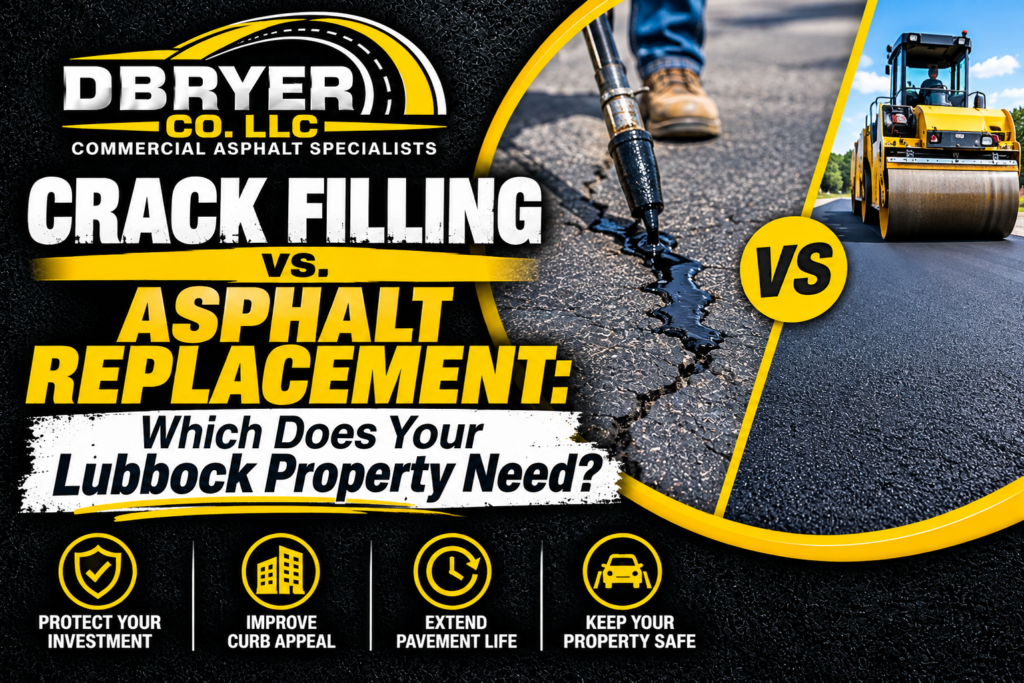
Crack filling involves cleaning cracks and applying an appropriate filling material to reduce water penetration. It helps slow further deterioration when the surrounding pavement is still in reasonable condition.
Asphalt replacement involves removing deteriorated pavement and installing new asphalt. Depending on the damage, the underlying base may also need repairs before new pavement is placed.
For commercial parking lots, selecting the correct treatment can help avoid unnecessary expenses and recurring maintenance problems.
When Should You Repair Asphalt Cracks Instead of Replacing the Pavement?
Choose crack filling when damage is limited and the pavement remains structurally stable.
Look for these conditions:
Small, isolated cracks across an otherwise solid asphalt surface.
Minor surface cracking without widespread depressions.
No significant potholes or recurring pavement failures.
Firm pavement without noticeable sinking or movement.
Cracks that have not developed into extensive interconnected patterns.
For example, a Lubbock retail parking lot with a few narrow cracks but a stable surface may only need professional crack filling. Addressing these openings early can help prevent moisture from entering the pavement and contributing to more serious damage.
However, crack filling is not a permanent solution for every type of asphalt deterioration.
When Does Asphalt Replacement Become Necessary?
Replacement becomes worth considering when the pavement has deteriorated beyond practical surface-level repairs.
Warning signs include:
Alligator cracking: A network of interconnected cracks resembling reptile scales, often indicating structural problems.
Repeated potholes: Potholes that return after repairs may point to underlying base failure.
Severe depressions: Sunken areas that indicate instability or drainage-related problems.
Widespread cracking: Extensive damage across multiple sections of the parking lot.
Base deterioration: Weak or unstable supporting layers beneath the asphalt.
For example, an older commercial property with extensive alligator cracking and recurring potholes may spend more on repeated repairs than on a properly planned replacement.
A professional pavement assessment can help determine whether localized reconstruction, resurfacing, or complete replacement is justified.
Crack Filling vs. Asphalt Replacement: Which Solution Is Right?
Use this comparison as an initial guide when evaluating your commercial pavement.
| Problem | Recommended Solution |
|---|---|
| Small cracks | Crack filling |
| Moderate deterioration | Repair + sealcoating |
| Large potholes | Asphalt repair |
| Severe structural failure | Replacement |
The final decision should consider the extent of damage, pavement stability, drainage, and traffic conditions.
How Does Lubbock’s Climate Affect Asphalt Pavement?
Lubbock properties experience intense summer sunlight, temperature fluctuations, wind, and occasional heavy rainfall. These conditions can accelerate surface aging and expose existing pavement weaknesses.
UV exposure can dry and age asphalt binders, while water entering open cracks can weaken supporting materials. Temperature changes can also contribute to expansion and contraction.
For commercial property owners, regular inspections are particularly useful around:
-
Parking lot entrances and exits.
-
Areas with frequent delivery truck traffic.
-
Drainage channels and low-lying sections.
-
Heavily used parking spaces.
What Should You Do Before Choosing a Paving Solution?
Before approving a repair or replacement project, take these steps:
-
Inspect the entire parking lot rather than focusing on individual cracks.
-
Identify potholes, standing water, uneven surfaces, and interconnected cracking.
-
Determine whether deterioration is isolated or widespread.
-
Have a qualified paving contractor assess the pavement and supporting base.
-
Compare repair, resurfacing, and replacement recommendations.
For more information about local pavement maintenance, read our guide to Asphalt Paving in Lubbock, TX: A Complete Guide for Homeowners and Businesses.
Get the Right Asphalt Solution for Your Lubbock Property
Choosing between crack filling and asphalt replacement comes down to understanding the actual condition of your pavement. Minor cracks usually deserve timely attention, while widespread structural damage requires a more comprehensive approach.
DBryerCo Paving & Painting provides asphalt paving, crack filling, repairs, sealcoating, and parking lot maintenance in Lubbock and surrounding West Texas communities.
Visit DBryerCo Paving & Painting to learn more about the company, or explore our commercial asphalt paving services in Lubbock.
Contact DBryerCo Paving & Painting today at (806) 329-9075 to discuss your commercial asphalt project and request a free estimate.
Frequently Asked Questions
Is crack filling cheaper than asphalt replacement?
Yes. Crack filling generally costs less because it addresses localized damage without removing and installing an entire pavement section. However, repeated filling on structurally damaged asphalt can waste money. The most cost-effective option depends on the pavement’s overall condition.
Can asphalt cracks get worse if left untreated?
Yes. Open cracks allow water to enter the pavement and potentially weaken the supporting base. Traffic and changing weather conditions can accelerate deterioration, eventually leading to wider cracks, potholes, and more expensive repairs.
How do I know if my parking lot needs replacement?
Look for widespread alligator cracking, recurring potholes, significant depressions, and areas where the pavement feels unstable. These conditions can indicate structural deterioration. A professional inspection can establish whether localized repairs or complete replacement is appropriate.
Can sealcoating fix damaged asphalt?
No. Sealcoating is a protective surface treatment, not a structural repair. It can help protect suitable asphalt from weather exposure and surface aging, but existing cracks, potholes, and structural failures should be addressed before sealcoating.
Should I repair potholes or replace the entire parking lot?
Isolated potholes can often be repaired without replacing the entire parking lot. However, if potholes repeatedly develop across multiple areas because of base failure or widespread deterioration, more extensive reconstruction or replacement may be necessary.
Who provides commercial asphalt repair in Lubbock, TX?
DBryerCo Paving & Painting provides asphalt paving, crack filling, asphalt repairs, sealcoating, and parking lot maintenance in Lubbock and surrounding West Texas communities. Contact the team at (806) 329-9075 to discuss your property’s paving requirements.