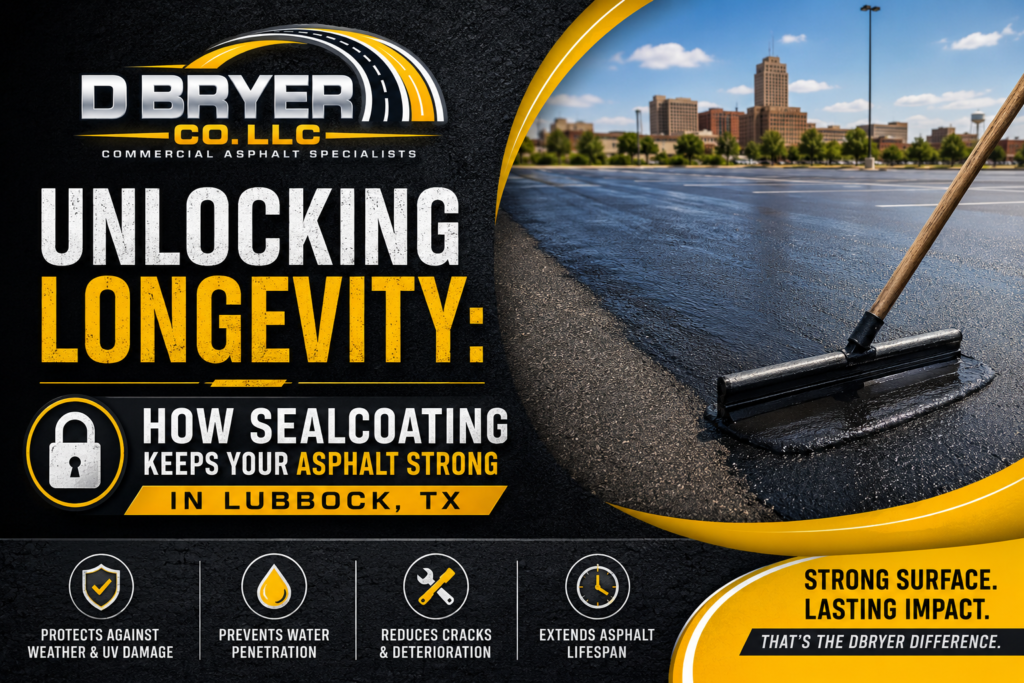
Unlocking Longevity: How Sealcoating Keeps Your Asphalt Strong in Lubbock, TX
Asphalt is a durable and cost-effective choice for driveways, parking lots, commercial properties, and other paved surfaces. However, even well-installed asphalt can deteriorate when it is continually exposed to sunlight, moisture, vehicle traffic, oil, and changing weather conditions. For property owners in Lubbock, TX, protecting asphalt from the harsh conditions of West Texas is an important part of long-term pavement maintenance.
One of the most effective ways to protect an existing asphalt surface is sealcoating. A properly applied sealcoat creates a protective barrier over asphalt, helping reduce damage caused by UV exposure, water, automotive fluids, and everyday traffic.
How Does Sealcoating Protect Asphalt in Lubbock, TX?
Sealcoating protects asphalt by creating a protective surface layer that helps shield pavement from UV rays, moisture, automotive fluids, oxidation, and everyday traffic. Regular sealcoating can slow surface deterioration, help prevent minor cracks from becoming larger problems, and extend the useful life of properly maintained asphalt.
For homeowners and businesses in Lubbock, professional sealcoating can be an important part of an overall asphalt maintenance program.
What Is Asphalt Sealcoating?
Sealcoating is the process of applying a protective coating to an existing asphalt surface. The coating is designed to protect the pavement surface from environmental and chemical factors that contribute to deterioration.
Over time, untreated asphalt becomes oxidized from exposure to the sun. Its dark appearance gradually fades to gray, and the surface can become dry and brittle. Small cracks may then develop, allowing water to reach deeper layers of the pavement.
Sealcoating provides an additional layer of protection between the asphalt and these damaging elements.
It is important to understand that sealcoating is a preventive maintenance treatment, not a replacement for asphalt repair. Significant cracks, potholes, drainage problems, or structural pavement damage should be addressed before sealcoating.
Why Does Asphalt in Lubbock Need Regular Protection?
Lubbock’s West Texas environment can be tough on paved surfaces. Asphalt is exposed to intense sunlight, heat, wind, dust, vehicle traffic, and occasional heavy weather throughout the year.
Several factors can accelerate asphalt deterioration:
Intense Sun and UV Exposure
Extended exposure to ultraviolet radiation causes asphalt binders to oxidize. As asphalt ages, it can lose flexibility and become more susceptible to cracking and surface deterioration.
Sealcoating helps provide a protective barrier against the effects of UV exposure and oxidation.
Heat and Temperature Changes
Hot summer temperatures can place additional stress on pavement, particularly when asphalt has already started to age or deteriorate.
Temperature changes can also contribute to expansion and contraction within pavement materials. Maintaining the surface can help reduce the progression of minor pavement problems.
Rain and Moisture
Water is one of the biggest threats to asphalt. When water enters cracks and reaches the pavement base, it can contribute to weakening and erosion.
Sealcoating helps protect the surface from moisture infiltration, although existing cracks and drainage issues should be repaired rather than simply covered.
Oil and Automotive Fluids
Vehicle fluids such as motor oil, gasoline, and other chemicals can deteriorate asphalt when they remain on the pavement.
A quality sealcoating system provides a protective surface that helps reduce the impact of these contaminants.
Daily Vehicle Traffic
Driveways, parking lots, and commercial pavement experience repeated vehicle loading. Over time, traffic combined with weather exposure can contribute to surface wear.
Routine maintenance, including timely sealcoating, can help keep properly constructed asphalt surfaces in better condition.
How Does Sealcoating Extend the Life of Asphalt?
Sealcoating does not make asphalt indestructible, but it can play an important role in extending the service life of a properly installed and maintained pavement surface.
Here are some of the key benefits.
1. Helps Protect Against UV Damage
UV radiation accelerates oxidation and can cause asphalt to become dry and brittle.
Sealcoating creates a protective surface layer that helps reduce direct exposure of the asphalt binder to damaging sunlight. This is particularly valuable for pavement that receives substantial sun exposure.
2. Helps Resist Water Penetration
Small cracks and surface imperfections can allow moisture to penetrate asphalt.
A properly maintained sealcoated surface can help reduce water intrusion through minor surface openings. However, significant cracks should be repaired before sealcoating for the best long-term results.
3. Helps Protect Against Automotive Chemicals
Oil and other vehicle fluids can damage asphalt over time.
Sealcoating provides a protective barrier that helps minimize direct contact between the asphalt surface and automotive contaminants.
4. Helps Slow Surface Oxidation
Fresh asphalt typically has a dark, rich appearance. As it ages and oxidizes, the surface becomes lighter and can eventually become brittle.
Sealcoating can help protect against surface oxidation while restoring a clean, dark appearance to properly prepared pavement.
5. Supports Long-Term Asphalt Maintenance
Sealcoating works best as part of a broader pavement maintenance strategy.
Regular inspections, crack repair, drainage maintenance, asphalt repairs, and timely sealcoating can help property owners address problems before they become more expensive.
How Often Should You Sealcoat Asphalt in Lubbock?
For many properly maintained asphalt surfaces, sealcoating is commonly considered every 2 to 3 years. However, there is no universal schedule that works for every property.
The ideal timing depends on factors such as:
- The age and condition of the asphalt
- Previous sealcoating treatments
- Amount of vehicle traffic
- Exposure to sunlight and weather
- Type and condition of the pavement
- Existing cracks and surface deterioration
- Whether the property is residential or commercial
High-traffic commercial parking lots may require more frequent inspections and maintenance than a lightly used residential driveway.
Rather than automatically applying sealcoat on a fixed schedule, it is better to have the pavement evaluated and determine whether the surface is ready for another treatment.
What Are the Signs Your Asphalt Needs Sealcoating?
Not sure whether your driveway or parking lot needs sealcoating? Look for these common signs:
Faded or Gray Asphalt
A significant change from dark black asphalt to a faded gray surface can indicate oxidation and aging.
Small Surface Cracks
Small cracks can allow moisture to reach the pavement structure. Addressing them early can help prevent them from developing into larger pavement problems.
Dry or Brittle Surface
A pavement surface that looks dry, aged, or weathered may benefit from professional evaluation and maintenance.
Increased Surface Wear
Areas exposed to frequent vehicle traffic may show more noticeable wear than surrounding pavement.
Loss of a Smooth, Finished Appearance
Sealcoating can restore a more uniform appearance to properly prepared asphalt while providing an additional layer of surface protection.
Important: Large cracks, potholes, severe raveling, drainage problems, and structural damage generally require repair before sealcoating.
What Are the Benefits of Professional Asphalt Sealcoating?
Professional sealcoating is about more than simply applying a coating to pavement. Proper preparation has a major impact on the quality and longevity of the finished result.
A professional asphalt contractor can:
- Inspect the pavement before treatment
- Identify cracks and damaged areas
- Recommend necessary repairs
- Prepare the surface properly
- Apply sealcoating using appropriate equipment
- Help determine an appropriate maintenance schedule
- Protect surrounding areas during the application process
Proper surface preparation is especially important because sealcoating cannot correct underlying structural problems.
Is Sealcoating Worth It for a Lubbock Driveway or Parking Lot?
For many property owners, sealcoating can be a cost-effective part of asphalt maintenance.
Maintaining pavement before deterioration becomes extensive can help reduce the likelihood of larger repair needs in the future. Sealcoating can also improve the appearance of an asphalt driveway, parking lot, or commercial property.
For businesses, a clean and well-maintained parking area can contribute to a more professional first impression for customers, employees, and visitors.
For homeowners, maintaining the driveway can improve the overall appearance of the property while helping protect the existing asphalt investment.
Professional Asphalt Sealcoating in Lubbock, TX
If your asphalt driveway, parking lot, or commercial pavement is showing signs of fading, surface wear, or minor cracking, professional sealcoating may be an effective way to protect the pavement and support its long-term performance.
DBryerCo Paving & Painting provides professional asphalt paving and sealcoating services in Lubbock, Texas. Our team can evaluate your pavement, identify maintenance needs, and help determine whether sealcoating or asphalt repair is the appropriate solution for your property.
Whether you own a home, manage a commercial property, or need pavement maintenance for another type of property, proper asphalt maintenance can help you get more value from your existing pavement.
For professional asphalt maintenance in Lubbock, contact DBryerCo Paving & Painting today.
Visit DBryerCo Paving & Painting to learn more about our services.
Frequently Asked Questions
How long does asphalt sealcoating last?
Sealcoating commonly lasts around 2 to 3 years, although the actual lifespan depends on traffic, weather exposure, pavement condition, application quality, and ongoing maintenance.
Does sealcoating prevent asphalt cracks?
Sealcoating helps protect asphalt from factors that contribute to surface deterioration, but it does not guarantee that cracks will never develop. Existing cracks should generally be repaired before sealcoating.
Can you sealcoat asphalt that already has cracks?
Minor cracks may be repairable before sealcoating. Larger cracks, potholes, drainage problems, and structural damage should be properly evaluated and repaired before applying a sealcoat.
Is sealcoating good for driveways?
Yes. Sealcoating can help protect residential asphalt driveways from UV exposure, moisture, automotive fluids, and normal surface wear while improving their appearance.
Is sealcoating beneficial for commercial parking lots?
Yes. Commercial parking lots experience frequent vehicle traffic and significant environmental exposure. Regular pavement inspections, crack repair, sealcoating, and other maintenance can help preserve the surface.
How often should asphalt be sealcoated in Lubbock?
Many asphalt surfaces can benefit from sealcoating approximately every 2 to 3 years, but the correct timing depends on the pavement’s condition, traffic levels, previous maintenance, and environmental exposure.
Can sealcoating repair potholes?
No. Sealcoating is primarily a protective maintenance treatment. Potholes and structural pavement damage require appropriate asphalt repair before a sealcoat is applied.
Why is asphalt maintenance important in Lubbock?
Lubbock pavement is exposed to strong sunlight, heat, wind, vehicle traffic, moisture, and other environmental factors. Regular maintenance helps address surface deterioration before minor issues become more significant pavement problems.