
Quick Answer:
A properly installed asphalt driveway can often last 15–20 years or longer with appropriate maintenance. In Lubbock, intense sunlight, heat, moisture, temperature changes, vehicle traffic, drainage problems, and delayed repairs can affect pavement life. Regular inspections, crack filling, appropriate sealcoating, and timely repairs can help protect the driveway and extend its useful service life.
What Determines How Long an Asphalt Driveway Lasts in Lubbock, TX?
There is no single lifespan that applies to every driveway. Two asphalt driveways in the same neighborhood can age differently because their foundations, drainage, traffic levels, installation quality, and maintenance histories may not be the same.
Does the quality of installation affect asphalt driveway lifespan?
Yes. The pavement you see is only one part of an asphalt driveway. The soil, aggregate base, grading, drainage, asphalt thickness, and compaction underneath it all contribute to long-term performance.
Poor preparation can lead to:
- Cracking
- Depressions and settlement
- Potholes
- Uneven pavement
- Premature deterioration
That is why experienced paving contractors evaluate the site before installation instead of simply placing asphalt over an unstable or poorly prepared surface.
How does Lubbock weather affect asphalt driveways?
Lubbock’s West Texas climate can be demanding on asphalt. Strong sunlight and ultraviolet exposure contribute to oxidation, which gradually makes asphalt less flexible and more susceptible to surface deterioration.
Heat and temperature changes can also place stress on pavement. Water is another major concern. When moisture enters open cracks and reaches the underlying layers, it can contribute to weakening and additional pavement damage.
For homeowners researching the basics of local asphalt installation, see DBryerCo’s complete guide to asphalt paving in Lubbock, TX.
How Can You Make an Asphalt Driveway Last Longer?
Preventative maintenance is usually easier than waiting until a driveway develops major structural problems.
Homeowners can help protect their asphalt by:
- Inspecting the driveway regularly for cracks, potholes, drainage issues, and uneven areas.
- Filling cracks early before water can penetrate deeper into the pavement.
- Keeping drainage paths clear so water does not remain around or beneath the driveway.
- Cleaning oil and automotive fluid spills when possible.
- Considering sealcoating when the asphalt is in suitable condition.
- Addressing potholes and damaged areas promptly rather than allowing deterioration to spread.
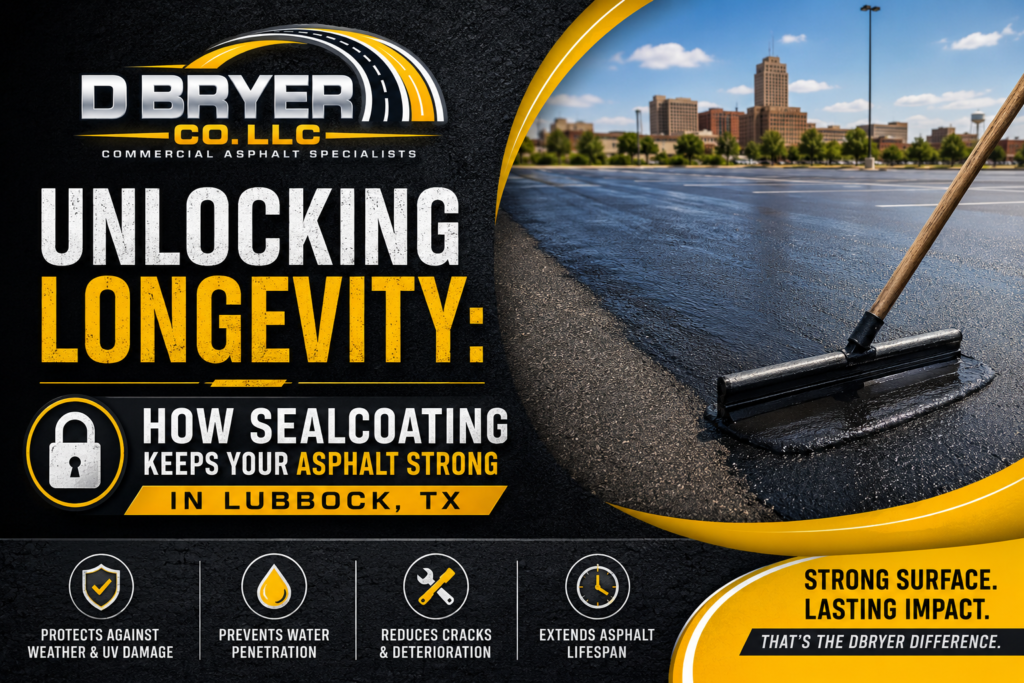
Sealcoating is a protective treatment applied to an existing asphalt surface. It can help reduce exposure to UV rays, moisture, automotive fluids, and everyday wear, but it is not a substitute for repairing serious structural damage.
When Should You Repair or Replace an Asphalt Driveway?
The correct solution depends on the extent and depth of the deterioration.
| Driveway Condition | Possible Approach |
|---|---|
| Small surface cracks | Crack repair and maintenance |
| Widespread minor cracking | Evaluation and preventative maintenance |
| Potholes or localized damage | Asphalt repair |
| Significant settlement | Base and drainage evaluation |
| Extensive cracking and structural failure | Possible resurfacing or replacement |
For example, a driveway with a few isolated cracks may only need maintenance. A driveway with recurring potholes, widespread alligator cracking, major settlement, or drainage problems may require a more comprehensive solution.
The important point is to identify why the pavement is failing, not simply cover the visible damage.
What Are the Warning Signs an Asphalt Driveway Is Nearing the End of Its Life?
Watch for these conditions:
- Extensive interconnected or alligator cracking
- Multiple recurring potholes
- Deep depressions or settlement
- Crumbling pavement edges
- Persistent standing water
- Large areas of deteriorated asphalt
- Repairs that repeatedly fail
When several of these problems occur across a driveway, isolated patching may no longer solve the underlying problem. A professional pavement evaluation can help determine whether repair, resurfacing, or replacement makes more sense.
Why Choose DBryerCo for Asphalt Paving in Lubbock?
DBryerCo Paving & Painting is a family-owned, locally operated paving contractor serving Lubbock and surrounding areas throughout West Texas. The company has more than 30 years of experience and provides residential and commercial asphalt services, including paving, driveway installation and repair, sealcoating, crack filling, and pavement maintenance.
Learn more about DBryerCo Paving & Painting and its local asphalt services.
For a closer look at the company’s paving process, preparation, grading, drainage, and installation approach, visit the DBryerCo asphalt paving services page.
Conclusion: How Long Does an Asphalt Driveway Last in Lubbock, TX?
So, how long does an asphalt driveway last in Lubbock, TX? A well-installed driveway can often provide 15–20 years or more of service, but its lifespan depends heavily on construction quality, drainage, traffic, weather exposure, and maintenance.
Regular inspections, early crack repair, appropriate sealcoating, good drainage, and prompt attention to pavement damage can help you get more useful years from your asphalt driveway. If deterioration is already widespread, having the pavement professionally evaluated can help determine whether repair, resurfacing, or replacement is appropriate.
Frequently Asked Questions
How many years should an asphalt driveway last in Texas?
A properly installed and maintained asphalt driveway can often last around 15–20 years or longer. The actual service life depends on factors such as drainage, base preparation, asphalt construction, vehicle traffic, climate exposure, soil conditions, and maintenance. A driveway with good drainage and timely repairs may remain serviceable considerably longer than one exposed to persistent moisture and neglected damage.
Does the Texas heat damage asphalt driveways?
Long-term sun and heat exposure can contribute to asphalt oxidation and surface deterioration. Ultraviolet radiation can cause the asphalt binder to become less flexible over time, increasing susceptibility to cracking. Lubbock’s combination of intense sunlight, heat, weather changes, and vehicle traffic makes preventative pavement maintenance particularly important for protecting an asphalt driveway.
How often should an asphalt driveway be sealcoated?
There is no universal sealcoating schedule for every driveway. Timing depends on the asphalt’s age, condition, previous treatments, traffic, weather exposure, and surface deterioration. Sealcoating should be applied to suitable pavement after necessary repairs and preparation. It should not be used simply to cover potholes, major cracks, drainage problems, or structural failure.
Is it better to repair or replace an asphalt driveway?
It depends on the severity and extent of the damage. Small cracks, isolated potholes, and localized deterioration may be repairable. Extensive alligator cracking, recurring potholes, severe settlement, drainage problems, and widespread structural deterioration may indicate that resurfacing or replacement should be considered instead of repeated small repairs.
What causes asphalt driveways to crack?
Asphalt cracking can result from several factors, including water intrusion, temperature changes, oxidation, soil movement, poor drainage, inadequate base preparation, pavement stress, and repeated vehicle loads. Small cracks should not be ignored because water can enter through them and contribute to deterioration of the pavement layers underneath.
Can sealcoating extend the life of an asphalt driveway?
Sealcoating can help protect suitable asphalt from environmental exposure, including UV radiation, moisture, automotive fluids, and everyday surface wear. It works best as part of a broader maintenance program that includes inspections, crack filling, drainage management, and timely repairs. Sealcoating cannot correct significant structural pavement problems.
When should I call an asphalt paving contractor?
Consider contacting an asphalt contractor when you notice widespread cracking, recurring potholes, significant settlement, crumbling edges, standing water, or repairs that continue to fail. A professional evaluation can identify whether the problem is primarily surface-related or connected to the pavement base, drainage, or overall structure.