If you own or manage a commercial parking lot, driveway, roadway, or other paved surface in West Texas, protecting the asphalt is an important part of property maintenance. Asphalt sealcoating in Lubbock, TX can help protect pavement from the intense sun, moisture, vehicle fluids, and everyday traffic that gradually contribute to surface deterioration.
What Is Asphalt Sealcoating?
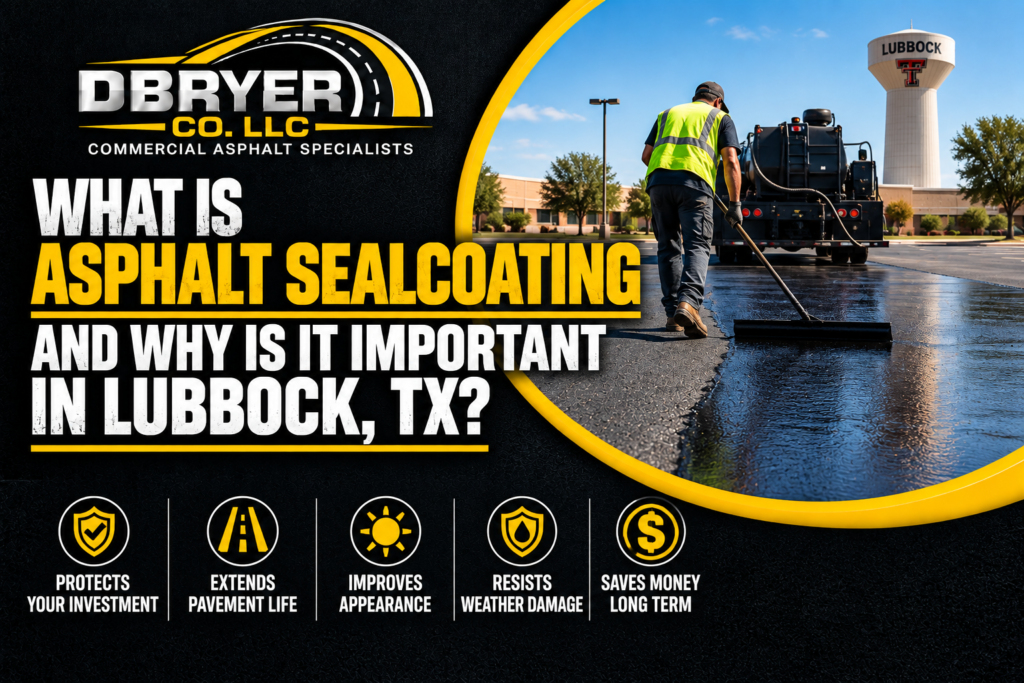
Asphalt sealcoating is a protective coating applied over an existing asphalt surface to help shield the pavement from damaging elements. It creates a barrier between the asphalt and exposure from sunlight, water, oil, gasoline, and other substances that can accelerate pavement deterioration.
For Lubbock property owners, this protection can be especially valuable because pavement is exposed to strong sunlight and changing weather conditions throughout the year.
Why does asphalt need protection?
Asphalt naturally contains oils and binding materials that help keep pavement flexible. Over time, environmental exposure causes these materials to break down. The pavement can become harder, more brittle, and more susceptible to cracking and other forms of damage.
Sealcoating does not repair severely damaged asphalt, but it can be an important part of a proactive pavement maintenance program.
Why Is Asphalt Sealcoating Important in Lubbock, TX?
Asphalt sealcoating in Lubbock, TX is important because it helps reduce the effects of UV exposure, water penetration, oxidation, and oil or gasoline contamination before these problems contribute to more serious surface deterioration.
Here are some of the main threats commercial asphalt surfaces face.
How does UV exposure damage asphalt?
Lubbock’s strong sunlight exposes pavement to ultraviolet radiation. UV rays gradually break down the components that help asphalt remain flexible.
This process can cause the pavement to become dry, faded, and brittle. Once asphalt loses flexibility, it can become more vulnerable to cracking and other damage.
A quality sealcoat provides a protective layer that helps reduce direct exposure of the underlying asphalt to the sun.
Can water damage asphalt?
Yes. Water is one of the major causes of pavement deterioration.
Small cracks and surface imperfections can allow water to move into the pavement. When moisture reaches the underlying layers, it can weaken the pavement structure and contribute to potholes, cracking, and other failures.
Sealcoating helps create a more water-resistant surface, but it should be applied before significant structural damage develops.
What is asphalt oxidation?
Oxidation is the gradual chemical reaction between asphalt and oxygen that causes the pavement binder to harden over time.
UV exposure, oxygen, weather, and general environmental conditions can accelerate this process. Oxidized asphalt often becomes less flexible and more susceptible to cracking.
Regular pavement maintenance, including properly timed sealcoating, can help slow the effects of oxidation and extend the useful life of an asphalt surface.
How do oil and gasoline affect asphalt?
Oil, gasoline, and other petroleum-based fluids can soften or weaken asphalt in areas where spills repeatedly occur.
This is particularly relevant for parking lots, commercial properties, service areas, and facilities with frequent vehicle activity. Prompt cleanup of spills combined with preventative pavement maintenance can help reduce long-term damage.
What Are the Benefits of Sealcoating Asphalt?
For commercial property owners, sealcoating can provide several practical benefits:
Helps protect asphalt from UV exposure
Reduces water penetration through surface imperfections
Helps slow oxidation and pavement aging
Provides protection against oil and gasoline exposure
Improves the overall appearance of aging pavement
Can help extend the service life of properly maintained asphalt
Supports a proactive pavement maintenance strategy
May reduce the frequency and cost of larger repairs over time
Sealcoating works best as part of an overall maintenance program rather than as a replacement for necessary asphalt repairs.
When Should You Sealcoat an Asphalt Surface?
The right timing depends on the pavement’s condition, previous maintenance, traffic levels, and environmental exposure.
A common mistake is waiting until asphalt has extensive cracking, potholes, or structural failure before considering maintenance. At that point, sealcoating alone may not be enough.
What should you do before sealcoating?
Before applying a sealcoat, a professional contractor should evaluate the pavement and address problems that require repair.
A practical maintenance process may include:
Inspect the pavement for cracks, potholes, and deterioration.
Repair significant cracks and damaged areas.
Clean dirt, debris, oil, and other contaminants from the surface.
Prepare the asphalt properly.
Apply the appropriate sealcoating system.
Allow adequate curing time before reopening the area to traffic.
Proper preparation is critical. Sealcoating over a dirty or significantly damaged surface will not produce the same result as professionally prepared pavement.
Is Sealcoating Worth It for Commercial Properties?
For many commercial property owners, preventative maintenance can be more practical than waiting for pavement problems to become extensive.
Consider a busy Lubbock parking lot with fading asphalt, minor surface cracks, and increasing vehicle traffic. Addressing those early warning signs can help protect the pavement before water infiltration, oxidation, and continued traffic contribute to more expensive deterioration.
However, sealcoating is not appropriate for every pavement condition. Severely deteriorated or structurally failed asphalt may require more extensive repair or replacement.
Asphalt Sealcoating: Pros and Cons
| Pros | Cons |
|---|---|
| Helps protect asphalt from environmental exposure | Does not fix major structural damage |
| Helps improve pavement appearance | Requires proper surface preparation |
| Can support longer pavement service life | Requires curing time |
| Helps reduce moisture and chemical exposure | Needs periodic maintenance |
| Supports proactive pavement maintenance | Poor application can reduce performance |
How Can Lubbock Property Owners Protect Their Asphalt?
The best approach is to treat asphalt maintenance as an ongoing process rather than a one-time project.
Inspect paved areas regularly, address cracks and spills promptly, maintain proper drainage, and have a professional evaluate the pavement when deterioration becomes noticeable.
If your property serves significant vehicle traffic, routine maintenance can be particularly important because repeated loading combined with West Texas weather can accelerate pavement wear.
For businesses looking for professional asphalt paving services in Lubbock, TX, DBryerCo Paving & Painting can evaluate the condition of your commercial pavement and recommend an appropriate maintenance approach.
You can also learn more about DBryerCo Paving & Painting and the services available for commercial properties in Lubbock and surrounding West Texas communities.
For additional pavement maintenance information, read our related article on parking lot maintenance and commercial pavement care.
Final Thoughts
Asphalt sealcoating in Lubbock, TX can be an important part of protecting properly maintained pavement from UV exposure, water penetration, oxidation, oil, gasoline, and everyday environmental wear. It can also improve the appearance of aging asphalt and support a proactive approach to pavement maintenance.
The key is timing. Sealcoating should be considered before pavement develops severe structural deterioration. If you’re unsure whether your commercial asphalt needs sealcoating, crack repair, resurfacing, or another solution, a professional pavement assessment is the best place to start.
DBryerCo Paving & Painting serves Lubbock and surrounding cities, helping commercial property owners maintain safer, more durable, and better-looking paved surfaces.
Frequently Asked Questions
How often should asphalt be sealcoated in Lubbock, TX?
The ideal schedule depends on pavement condition, traffic, weather exposure, and previous maintenance. Many properly maintained asphalt surfaces can benefit from periodic sealcoating, but there is no single schedule that fits every property. A professional inspection can determine whether your pavement is ready for another application or needs repairs first.
Does sealcoating prevent asphalt cracks?
Sealcoating can help protect asphalt from environmental factors that contribute to deterioration, but it does not eliminate cracking. Existing cracks should generally be cleaned and repaired before sealcoating. If cracks are widespread or caused by structural problems, additional pavement repairs may be necessary.
Can sealcoating stop water from damaging asphalt?
Sealcoating helps create a protective surface that reduces water exposure, but it is not a guarantee against water damage. Proper drainage and timely crack repair are also important. Water entering through untreated cracks can eventually weaken underlying pavement layers and contribute to potholes and more serious deterioration.
Does the Lubbock sun damage asphalt?
Yes. Prolonged UV exposure can accelerate oxidation and cause asphalt to become harder and more brittle. Over time, this can increase susceptibility to cracking and surface deterioration. A properly applied sealcoat can provide an additional protective barrier against environmental exposure and help preserve the pavement’s appearance.
Is sealcoating good for commercial parking lots?
Yes, sealcoating can be a useful component of a commercial parking lot maintenance program when the asphalt is structurally sound. Parking lots experience constant exposure to sunlight, water, vehicle traffic, oil, and gasoline. Maintaining the surface proactively can help protect the pavement and delay more extensive repairs.
Can you sealcoat damaged asphalt?
It depends on the type and severity of the damage. Minor surface issues may be repairable before sealcoating, while extensive cracking, potholes, drainage problems, or structural deterioration may require more substantial pavement work. A professional assessment should be completed before deciding whether sealcoating is appropriate.
What happens if asphalt is not maintained?
Unmaintained asphalt can gradually become oxidized, brittle, cracked, and vulnerable to water penetration. Small problems can develop into potholes and structural deterioration, potentially requiring more expensive repairs. Regular inspections and preventative maintenance can help identify problems earlier and protect the investment in your pavement.