
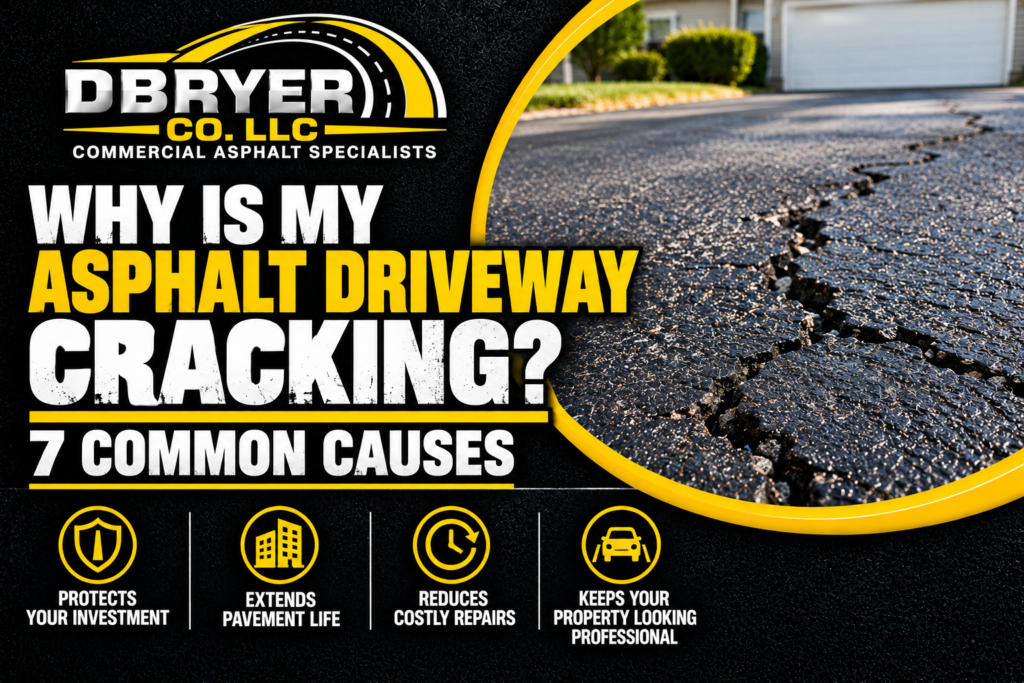
Noticing cracks in your asphalt driveway can be frustrating, especially when the surface once looked smooth and well-maintained. You might see thin lines, widening gaps, or a pattern resembling alligator skin. Understanding why your asphalt driveway is cracking helps you identify potential problems early and decide what kind of maintenance may be necessary.
Why Is My Asphalt Driveway Cracking?
Asphalt driveways commonly crack because of aging, temperature changes, water infiltration, poor drainage, weak foundations, excessive loads, or improper installation. Small surface cracks may initially appear harmless, but moisture and repeated traffic can make them worse. Identifying the underlying cause is essential because filling the visible crack alone may not solve the problem.
1. How Does Weather Cause Asphalt Cracks?
Temperature changes can make asphalt expand and contract. Over time, repeated cycles of heating and cooling create stress within the pavement, particularly as the asphalt becomes less flexible with age.
In colder climates, water entering small cracks can freeze and expand, widening existing openings. In hot conditions, prolonged sunlight can accelerate oxidation, a process that gradually makes asphalt harder and more brittle.
What helps: Inspect asphalt surfaces periodically and address developing cracks before water has more opportunities to penetrate the pavement.
2. Can Poor Drainage Make Asphalt Crack?
Yes. Water is one of the most damaging factors affecting asphalt pavement because it can weaken the supporting layers beneath the surface.
When rainwater collects in low spots or flows toward the pavement instead of away from it, moisture may penetrate cracks and compromise the base. As the foundation weakens, the asphalt can settle, deform, or break apart.
Look for standing water after rainfall, eroded edges, and recurring puddles. Correcting drainage problems may be necessary before repairing the damaged surface.
3. Does a Weak Foundation Cause Driveway Cracking?
A weak or poorly compacted base can cause asphalt to crack even when the surface material initially appears sound.
The base is the supporting layer beneath the asphalt. It distributes vehicle loads and helps the pavement remain stable. If this layer contains unsuitable material, inadequate compaction, or unstable soil, the surface may move under traffic.
For example, cracks that return after repeated patching may indicate a deeper structural problem. In such cases, repairing the affected base may be more effective than repeatedly filling the same openings.
4. Can Heavy Vehicles Damage Asphalt Pavement?
Yes. Asphalt pavement is designed to withstand particular traffic loads, and repeated loads beyond its design capacity can accelerate deterioration.
Delivery trucks, construction equipment, and other heavy vehicles can place substantial stress on pavement, especially where the foundation is weak. Commercial parking areas and access lanes may be particularly vulnerable when their original design does not account for actual traffic.
Review vehicle access and loading patterns if cracks appear along frequently used routes. A pavement professional can assess whether the surface needs localized repairs or more extensive rehabilitation.
5. Why Does Old Asphalt Develop Alligator Cracking?
Alligator cracking is a network of interconnected cracks that resembles reptile skin. It often indicates fatigue or structural failure within the pavement rather than a simple cosmetic defect.
This pattern can develop when repeated traffic loads weaken the asphalt and underlying support. Water infiltration and poor drainage may accelerate the damage.
Unlike an isolated hairline crack, widespread alligator cracking often requires investigation of the underlying pavement structure. Applying a surface coating alone will not correct a failed base.
6. Can Poor Installation Lead to Asphalt Cracks?
Yes. Improper installation can shorten the life of asphalt pavement and increase the likelihood of premature cracking.
Common problems include inadequate compaction, an improperly prepared base, unsuitable asphalt thickness, and paving under unfavorable conditions. Poorly constructed joints can also become weak points where moisture enters.
If a relatively new surface develops extensive cracking, consider having its installation and drainage conditions assessed. The appropriate repair depends on whether the defect is limited to the surface or extends into the supporting layers.
7. Does Neglecting Asphalt Maintenance Make Cracking Worse?
Neglecting maintenance allows small defects to develop into larger problems. Water, debris, temperature changes, and traffic can gradually enlarge existing cracks.
Routine inspections help identify changes before damage spreads. Keep drainage paths clear, remove debris, and arrange an assessment when cracks widen, multiply, or develop into broken pavement.
For more asphalt maintenance advice, explore our . Property owners and facility managers can also visit the DBryerCo Paving & Painting to learn more about the company.
How Can You Prevent Asphalt Cracks From Getting Worse?
Although no asphalt surface is completely crack-proof, consistent maintenance can reduce avoidable deterioration.
Inspect pavement seasonally and after severe weather.
Address drainage problems that leave standing water.
Have suitable cracks cleaned and sealed using appropriate materials.
Avoid repeatedly exposing weak pavement to excessive vehicle loads.
Investigate recurring cracks instead of patching the same area indefinitely.
Seek a professional assessment when cracking spreads or the pavement begins to sink.
For commercial paving needs, see our asphalt paving services.
Conclusion
Understanding why your asphalt driveway is cracking helps you distinguish minor surface damage from problems that may involve drainage, the foundation, or structural fatigue. Weather, aging, poor installation, and heavy traffic can all contribute to pavement deterioration.
The best next step is to identify the cause before choosing a repair. Regular inspections and timely maintenance can help extend pavement life and reduce the risk of more extensive repairs later.
Frequently Asked Questions
Should I worry about small cracks in my asphalt driveway?
Small cracks do not always indicate major structural damage, but they should not be ignored. Water can enter these openings and gradually weaken the pavement or its supporting base. Monitor whether cracks widen, multiply, or develop into depressions. Prompt assessment and appropriate crack sealing may help prevent further deterioration when the surrounding asphalt remains structurally sound.
What are alligator cracks in asphalt?
Alligator cracks are interconnected cracks that create a pattern resembling reptile skin. They commonly indicate pavement fatigue or a weakened supporting structure caused by repeated traffic loads, moisture, or inadequate foundation support. Because the problem may extend beneath the surface, simply filling the visible cracks is often insufficient. A professional assessment can help determine whether deeper repairs are necessary.
Can I fill asphalt cracks myself?
Some narrow, isolated cracks can be treated with suitable DIY asphalt crack fillers when the surrounding pavement is stable. The crack must be prepared according to the product instructions, and the filler must be appropriate for the conditions. Widespread cracking, sinking pavement, recurring damage, or alligator cracking warrants a closer assessment before attempting a surface-level repair.
Does water make asphalt driveway cracks worse?
Yes. Water can seep through cracks and weaken the granular base or underlying soil. Poor drainage allows moisture to remain in contact with the pavement for longer, increasing the risk of settlement and deterioration. In freezing conditions, water can also expand inside cracks. Correcting drainage and repairing suitable cracks can help limit further damage.
Why does my asphalt keep cracking after repairs?
Recurring cracks may indicate that the original cause has not been resolved. Common reasons include a weak foundation, continuing water infiltration, unstable soil, heavy traffic loads, or movement between pavement sections. Surface filler cannot correct every structural problem. If the same cracks repeatedly return, investigate the underlying conditions before choosing another repair.
How long should an asphalt driveway last before cracking?
The lifespan of asphalt varies with installation quality, pavement thickness, climate, drainage, traffic, and maintenance. Some minor cracking may appear before the pavement reaches the end of its useful life, while poor installation or inadequate support can cause premature deterioration. Rather than relying on age alone, assess the crack pattern, surface condition, drainage, and frequency of recurring damage.
When should I call an asphalt paving professional?
Seek a professional assessment when cracks spread quickly, form interconnected patterns, return after repairs, or appear alongside sinking, potholes, or standing water. These signs may indicate problems beneath the asphalt. Early evaluation can help distinguish localized maintenance needs from structural damage and identify the most appropriate repair strategy for the pavement’s condition.